Key Takeaways:
- ADAS driver assistance systems support safer driving, but do not replace driver responsibility.
- Common ADAS features such as automatic braking and lane assistance are well-suited to Singapore’s traffic conditions.
- Driver assistance technology has clear limitations, especially in poor weather, dense traffic, and older vehicle models.
- Understanding model year differences is essential when evaluating vehicle safety systems.
- Choosing the right ADAS setup depends on how and where you drive, not just feature lists.
Understanding ADAS in Everyday Singapore Driving
ADAS driver assistance systems are now common across both new and used cars in Singapore. While these technologies are designed to support safer driving, many drivers misunderstand what ADAS actually does, when it helps most, and where its limits lie. Some overestimate its capabilities, while others dismiss it entirely due to early experiences with intrusive alerts or inconsistent behaviour.
This article explains ADAS driver assistance clearly, addresses common misconceptions, and helps drivers make informed decisions when choosing or using a car equipped with modern driver assistance technology. All scenarios are grounded in real Singapore driving conditions, from expressways and multi-storey car parks to school zones and dense residential areas.
What ADAS Driver Assistance Is and How It Works
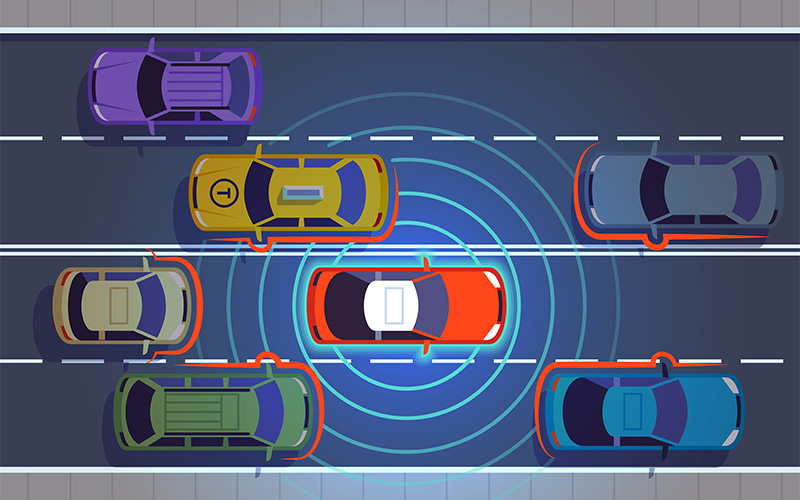
Advanced Driver-Assistance Systems (ADAS) refers to a collection of electronic vehicle safety systems that use cameras, radar sensors, ultrasonic sensors, and electronic control units to monitor the surrounding driving environment and assist the driver in real time.
Core system components typically include:
- Forward-facing cameras mounted near the windscreen to detect lane markings, vehicles, pedestrians, and traffic signs
- Millimetre-wave radar to measure distance and relative speed, especially on highways
- Electronic control units that process sensor data and trigger warnings or vehicle interventions
ADAS functions in a few main ways. Some systems provide alerts through visual indicators, audible warnings, or steering wheel vibrations. Others actively intervene by applying braking, adjusting throttle input, or providing steering correction.
Typical technical parameters include camera fields of view ranging from 40 to 120 degrees, depending on function, radar detection ranges of around 150 to 250 metres for adaptive cruise systems, and reaction times measured in milliseconds. Performance still depends heavily on sensor clarity and calibration.
Understanding this foundation helps drivers set realistic expectations and reduces the risk of over-reliance on car driver assistance systems.
Key ADAS Features Drivers Commonly Encounter in Singapore
Most modern sedans, SUVs, and MPVs sold locally include a combination of ADAS features, though availability varies by trim level and model year.
Automatic Emergency Braking detects potential frontal collisions and applies braking if the driver does not react in time. This is especially relevant in Singapore’s stop-start expressway traffic and sudden slowdowns near exits.
Lane Departure Warning and Lane Keep Assist alert drivers when drifting out of the lane and may apply gentle steering corrections. These systems rely heavily on visible lane markings, which can be inconsistent on older roads or during resurfacing works.
Blind Spot Monitoring uses rear radar sensors to detect vehicles in adjacent lanes. This is particularly helpful on busy arterial roads and when merging onto expressways.
Adaptive Cruise Control maintains a set distance from the vehicle ahead by automatically adjusting speed. It reduces fatigue during longer commutes but can behave conservatively in dense traffic where vehicles frequently cut in.
Rear Cross Traffic Alert warns of approaching vehicles when reversing out of parking spaces, a common challenge in crowded HDB and shopping mall car parks.
When assessing ADAS features at a car dealer, it is important to verify which systems are included rather than assuming they are standard.
Practical Benefits of ADAS for Everyday Singapore Driving
When used correctly, ADAS driver assistance offers tangible benefits for daily driving.
Collision risk reduction is one of the most established advantages. Automatic emergency braking and forward collision warnings help reduce rear-end accidents, which are common during peak-hour congestion.
Driver fatigue is also reduced. Adaptive cruise control and lane assistance lessen mental strain during long expressway drives or repeated stop-start traffic.
Situational awareness improves through blind spot monitoring and cross-traffic alerts, which compensate for limited visibility in tight urban environments.
For newer drivers, driver assistance technology provides early warnings and corrective support during unfamiliar driving scenarios, such as navigating expressway interchanges or multi-lane roads.
These benefits apply whether you plan to buy new car models with the latest systems or buy second-hand car options equipped with earlier generations of ADAS. The key is understanding how the system behaves in real-world conditions.
Limitations, Risks, and Common Misunderstandings
Despite its advantages, ADAS driver assistance has clear limitations that drivers must recognise.
Sensor dependency is a major constraint. Heavy rain, glare, low-light conditions, worn lane markings, and dirty sensors can all reduce system performance. In tropical downpours, cameras may struggle to track lanes accurately, leading to system disengagement.
ADAS systems also have defined boundaries. They cannot reliably predict unpredictable road users, such as motorcycles weaving between lanes or pedestrians stepping out suddenly. Vehicle safety systems respond to programmed conditions rather than contextual judgment.
Differences are often more noticeable between earlier-generation and newer-generation systems, as well as across different trims within the same model. Sensor combinations, calibration standards, and software logic can vary significantly even when features share similar names. As a result, two vehicles labelled with the same ADAS functions may behave very differently on the road, depending on how the system is implemented and updated.
False confidence is another concern. Some drivers assume the car will manage hazards independently, which can delay reaction times and reduce attention. ADAS assists the driver rather than replacing active control.
Maintenance and calibration also matter. Windscreen replacement, suspension alignment, or accident repairs often require sensor recalibration. This adds cost and complexity, particularly for owners who buy second-hand car models without full service history documentation.
Choosing the Right ADAS Setup for Your Driving Needs
ADAS features vary widely across models, years, and trim levels. Selecting the right setup depends on how and where you drive, rather than on marketing labels alone.
Drivers who frequently use expressways may benefit most from adaptive cruise control and forward collision mitigation. Those navigating dense neighbourhoods and car parks may prioritise blind spot monitoring and rear cross traffic alerts.
When deciding whether to buy new car models or explore used options, it helps to assess how refined the driver assistance technology feels in actual driving. Test drives remain essential, as paper specifications rarely reflect real behaviour.
At M Motors, we help drivers understand which ADAS features are genuinely useful for Singapore roads, compare vehicle safety systems objectively, and identify models with well-integrated car driver assistance systems. Our team can also arrange test drives so you can experience system behaviour firsthand and choose a setup that supports your driving style without unnecessary complexity or cost.
Speak to us for clear, practical guidance on ADAS driver assistance, beyond marketing claims and feature lists. We help you understand how these systems perform in real Singapore driving conditions so you can choose a car that supports safer and more confident driving.